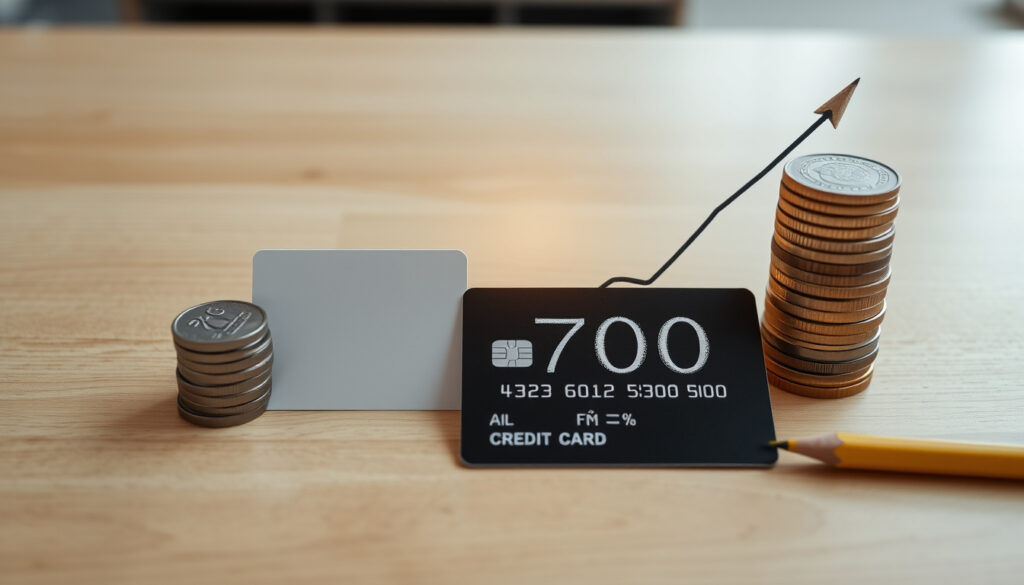
Build Credit from Scratch: Fastest Path to Your First Score
If you have never had a credit card or loan, the moment you try to rent an apartment or finance a car you hit a wall—no credit history means no score, and no score means no approval. The good news is that building a credit file from a standing start is straightforward when you know the right levers to pull.
Average FICO Score in the US: 714 (as of 2023, Experian data) ·
Minimum Credit History Length for a Score: 6 months of activity on a credit report ·
Percentage of Americans with No Credit File: Approximately 26 million (CFPB) ·
Top Factor Impacting Score: Payment history (35% of FICO score) ·
Time to Build a Good Score: 6-12 months with consistent positive behavior
Quick snapshot
- Secured credit cards report to all three credit bureaus (Regions Bank)
- Payment history accounts for 35% of the FICO score (Fidelity Bank)
- Exact score increase per month varies by individual and cannot be predicted (Chase Bank)
- Effectiveness of rent reporting services is inconsistent across lenders (CFPB)
- The speed at which authorized user status builds credit depends on the primary account holder’s history and consistency (Fidelity Bank)
- 6 months of activity required for first FICO score (Regions Bank)
- Credit-builder loans run 6-24 months (CFPB)
- Dual strategy of secured card plus authorized user provides fastest path (Fidelity Bank)
- After 6 months, monitor free credit reports and consider a second account (First South Financial)
The following table outlines key credit scoring metrics.
| Metric | Value |
|---|---|
| FICO Score Range | 300-850 |
| Time to Generate First Score | 6 months of credit activity |
| Ideal Credit Utilization Ratio | Below 30%, preferably under 10% |
| Average Age of Credit Score Weight | 15% of FICO score |
What is the fastest way to build credit from scratch?
Using a secured credit card
- A secured card requires a refundable deposit—typically between $200 and $500—which becomes your credit limit. The CFPB (US consumer financial regulator) confirms that the deposit restores the spending limit upon payment, making it a low-risk entry point for both issuer and user.
- These cards report on-time payments to Equifax, Experian, and TransUnion, which means every month of responsible use counts toward your credit file. Regions Bank (regional US bank) notes that secured cards are the most common recommendation for first-time builders.
Becoming an authorized user
- No credit check is required when you become an authorized user on a family member’s or partner’s credit card. You inherit their positive payment history as long as the primary account holder has good standing. Fidelity Bank (US community bank) lists this as one of the fastest ways to generate a credit score from nothing.
- The risk: if the primary user misses payments or carries high balances, that negative behavior can also appear on your report. Choose someone with a proven track record.
Applying for a credit-builder loan
- Credit-builder loans from credit unions or community banks deposit the loan amount into a locked savings account while you make monthly payments. After 6 to 24 months, the savings are released to you. The CFPB (federal consumer protection agency) confirms that on-time payments are reported to credit bureaus throughout the term.
- This approach builds an installment history, which diversifies your credit mix—a factor worth 10% of your FICO score, per TD Bank (major US bank).
Prepaid cards and debit cards do not build credit. The CFPB (federal regulator) explicitly warns that cash-based spending is invisible to credit bureaus because it involves no borrowing or repayment reporting.
The pattern: a dual approach of secured card and authorized user status offers the fastest documented start.
What is the biggest killer of credit scores?
Late payments and missed payments
- Payment history accounts for 35% of your FICO score—the single largest component. A single 30-day late payment can drop a good score by 60 to 110 points, according to data cited by Fidelity Bank (US community lender).
- Setting up automatic payments or alerts is the simplest insurance against this damage. The NCUA (US credit union regulator) recommends automated systems as a foundational habit.
High credit utilization
- Credit utilization—the ratio of your balances to your credit limits—accounts for 30% of the FICO score. Keeping it below 30% is standard advice, but Fidelity Bank suggests aiming below 10% for maximum scoring benefit.
- A practical rule: use the card for a small recurring charge like a streaming subscription, then pay it off in full each month.
Filing for bankruptcy
- Bankruptcy stays on a credit report for up to 10 years. It is a legal last resort that resets debt but heavily damages the payment history factor. NCUA (federal credit union regulator) notes that rebuilding after bankruptcy is possible but requires years of consistent on-time payments.
A beginner with no credit faces one vulnerability: a single late payment can set you back months. The Chase Bank (major US issuer) warns that no credit-building strategy works if you miss the first payment.
The implication: avoiding late payments and keeping utilization low are the two non-negotiable habits for a healthy score.
Smart ways to build credit from scratch
Secured credit cards vs. unsecured cards
- Secured cards require a deposit; unsecured cards do not. For beginners with no history, unsecured approval is rare. Regions Bank (US regional bank) recommends starting with a secured card and transitioning to an unsecured card after 6-12 months of on-time payments.
- Store credit cards with low limits (often $200-$500) are an alternative for beginners, but NCUA (federal credit union regulator) advises avoiding cards with high interest rates and fees that can trap first-time users.
Credit-builder loans from local credit unions
- Credit unions often offer credit-builder loans with lower fees than banks. The loan amount—typically $300 to $1,000—is held in a savings account while you make monthly payments. The CFPB (federal regulator) confirms this builds both credit history and savings simultaneously.
- The NCUA (credit union regulator) notes that credit unions are more likely to work with members who have thin files.
Reporting rent and utility payments
- Services like Experian Boost and RentTrack allow you to report on-time rent and utility payments to credit bureaus. Regions Bank (regional US bank) notes this can provide a quick lift of 10 to 30 points for some users, though the CFPB (federal regulator) warns effectiveness varies because not all services report to all three bureaus.
Three strategies, one pattern: each method relies on reporting consistent, on-time activity. The difference is in speed—authorized user status and secured cards produce results in weeks, while rent reporting and credit-builder loans may take months to show measurable movement.
The trade-offs: each method has a distinct balance of speed, risk, and accessibility.
How to get a 700 credit score in 30 days?
Why 30 days is unrealistic for most people
- Building a credit score from zero to 700 typically requires 6 to 12 months of consistent positive behavior. Chase Bank (major US issuer) states outright that no legitimate method can guarantee a 700 score in 30 days. Any service promising otherwise is likely a scam.
- The minimum requirement for a FICO score is six months of activity on at least one account. Even then, the score starts low and climbs gradually.
Quick fixes: paying down utilization
- For people who already have a thin credit file (e.g., a secured card with a $300 limit and a $250 balance), paying the balance down to under 10% can produce a 20 to 50 point jump within one billing cycle. Fidelity Bank (US community bank) explains that utilization is the second-largest factor in the FICO model.
- This fix only works if you already have a credit report. From zero history, there is nothing to optimize.
Long-term strategies for a 700 score
- After 6 months with a secured card and an authorized user account, many beginners reach scores in the 650-700 range. TD Bank (major US bank) notes that the combination of a long average age of accounts and low utilization is the most reliable path to a 700+ score.
- Adding a second credit card or a small installment loan at month 12 can further improve the credit mix factor.
The catch: a 700 score requires patience; focus on building habits, not shortcuts.
Is having no credit better than bad credit?
The challenge of a thin credit file
- Lenders often reject new applicants with no credit history because they have no data on repayment behavior. The CFPB (federal consumer regulator) advises that a thin file is not the same as a negative file—it simply means the applicant is invisible to the scoring system.
- Some lenders use alternative data like bank account history or rent payments, but most rely on traditional credit reports.
Why bad credit is more difficult to overcome
- A low score—below 580—results in higher interest rates, stricter lending terms, and fewer approval options. Negative items like late payments and collections can take years to fall off. Navy Federal Credit Union (US military-affiliated credit union) advises that building from scratch is easier and faster than repairing damaged credit.
- A 300 credit score is rare—most low scores fall in the 400-500 range—but the damage is real: you may pay 5-10% more in interest on any loan approval.
Best approach for starting fresh
- If you have no credit, start with a secured card and an authorized user arrangement. If you have bad credit, focus on paying down collections and disputing errors before opening new accounts. Navy Federal Credit Union (US credit union) recommends the fresh-start approach for applicants with zero history, not for those recovering from bankruptcy.
No credit means you are invisible. Bad credit means you are visible but penalized. For the 18-year-old opening a first card, no credit is the better starting point. For the person with a 520 score and a bankruptcy on file, rebuilding is the only option—and it takes 3-7 years.
The decision: starting from scratch is preferable to repairing damage, but both paths require discipline.
Method comparison table
Four popular strategies, one pattern: speed and risk are inversely related. The fastest options require the least history but carry the most dependency on another person’s behavior.
| Method | Time to first score | Deposit required | Risk level | Reports to all 3 bureaus |
|---|---|---|---|---|
| Secured credit card | 6 months | $200-$500 | Low | Yes |
| Authorized user | 30-60 days | None | Medium (depends on primary) | Varies by issuer |
| Credit-builder loan | 6 months | None (loan held in savings) | Low | Yes |
| Rent reporting | 1-2 months (retroactive) | None (some services charge fee) | Low | No (varies by service) |
The comparison: each option has distinct trade-offs between speed, upfront cost, and reporting consistency.
Pros and cons of each method
Upsides
- Secured cards are the most accessible product for first-time users
- Authorized user status requires no credit check or upfront cash
- Credit-builder loans build savings while building credit
- Rent reporting can capture existing payment history with no new spending
Downsides
- Secured cards require cash upfront that is locked until upgrade
- Authorized user risk: primary cardholder’s poor habits harm your score
- Credit-builder loans add monthly payment obligation with no immediate spending
- Rent reporting does not affect all scoring models equally
The trade-offs: each method balances speed, risk, and accessibility differently.
Step-by-step plan to build credit from scratch
Five steps, one pattern: each builds on the previous one, moving from invisible to creditworthy in 12 months.
- Open a secured credit card. Deposit $200-$500 as collateral. Make one small purchase monthly—a streaming subscription works—and pay the full balance by the due date. Regions Bank (regional US bank) recommends choosing a card that reports to all three bureaus from day one.
- Become an authorized user. Ask a parent, partner, or trusted relative with good credit to add you to their card. No deposit needed. Fidelity Bank (US community bank) highlights this as the fastest score generator for beginners.
- Set up automatic payments. Every missed payment sets you back. Build the habit from month one. The NCUA (federal credit union regulator) advises auto-pay as the single most effective prevention tool.
- Keep utilization below 10%. If your secured card has a $300 limit, never let the balance exceed $30 at statement time. Pay multiple times per month if needed.
- After 6 months, consider a second account. Open a credit-builder loan or a second secured card. A mix of revolving (card) and installment (loan) credit boosts scoring. TD Bank (major US bank) confirms that credit mix contributes 10% of the FICO score.
The sequence: these five steps take you from invisible to creditworthy in a year.
What blocks credit building?
Debit cards and cash
- Debit and cash transactions are not reported to credit bureaus because they involve no borrowing. The CFPB (federal regulator) is explicit: only credit-based accounts build a credit file.
Store cards with predatory terms
- Retail store credit cards often come with low limits (often $200-$400) and high interest rates. While they can help build history, NCUA (federal regulator) warns that high fees and penalties can derail a beginner’s progress.
Closing your first credit card
- Closing an account reduces your total available credit (hurting utilization) and shortens your average account age. TD Bank (major US bank) recommends keeping your oldest card open even if you no longer use it.
“Building credit from scratch requires opening at least one credit-reported account like a secured credit card or credit-builder loan and using it responsibly for at least six months.”
“Secured credit cards restore the spending limit upon payment, making them a low-risk entry point for people with no credit history.”
— Consumer Financial Protection Bureau (US federal regulator)
“No legitimate method can guarantee a 700 credit score in 30 days.”
“Building credit from scratch is easier and faster than repairing damaged credit.”
— Navy Federal Credit Union (US credit union for military members)
The obstacles: common missteps like using debit cards or closing accounts can stall progress.
The bottom line on building credit from scratch
The path from zero history to a usable credit score is shorter than most people think: six months of consistent, on-time payments on a secured card and an authorized user account will give you a FICO score in the mid-600s. No hack, no shortcut, no 30-day miracle. For the 26 million Americans without a credit file according to the CFPB (federal regulator), the decision is simple: open a secured card this week, set a $10 monthly subscription as your only charge, and let the calendar do the rest. For the person worried about a thin file, the action is equally clear: add yourself as an authorized user on a trusted account, or stay invisible to the lending system.
Frequently asked questions
What is a good credit score to start with?
Most beginners start with a score between 500 and 600 after six months of activity. A score of 670 or above is considered “good” by FICO standards, but reaching that level usually takes 12-24 months of consistent behavior.
How long does it take to build credit from scratch?
You need six months of credit-reported activity to generate a FICO score. Building to a “good” score (670+) typically takes 12-24 months. Regions Bank (regional US bank) advises that the first score is the hardest milestone to cross.
Can I build credit without a social security number?
Yes. Some issuers allow you to apply for a secured card using an Individual Taxpayer Identification Number (ITIN) or a passport. The CFPB (federal regulator) notes that credit bureaus can build a file using ITIN-based accounts.
What is the minimum credit score needed for a mortgage?
Most conventional mortgages require a minimum FICO score of 620. FHA loans may accept scores as low as 580 with a larger down payment. Building to 620 is achievable within 12 months using the strategies outlined above.
Does checking my own credit hurt my score?
No. Checking your own credit report or using a free credit monitoring service is a soft inquiry and does not affect your score. TD Bank (major US bank) encourages regular monitoring to catch errors.
How many credit cards should I open to build credit?
One secured card is enough to start. After 6-12 months, a second card or a credit-builder loan can improve your credit mix. Opening more than 2-3 accounts in the first year can hurt your average account age and appear risky to lenders.
What happens if I close my first credit card?
Closing your oldest card reduces your total available credit and shortens your average account age, which can lower your score. TD Bank (major US bank) recommends keeping your first card open even if you stop using it.
Flere relaterte innlegg
 Kake Rema 1000 – Priser, varianter og bestilling
 Borussia Dortmund tabeller 2024/25 – stilling og historie
 Takvifte med lys – Beste modeller, tester og kjøpsguide
 Hvor er iPhone? Slik finner du en mistet iPhone | Guide 2025
 Watch Movies Free – Beste Lovlige Tjenester 2025
 Harry Potter og de vises stein: Aldersgrense, strømming og serie
 Rollebesetningen i Doc Martin – full oversikt
 Gard Isaksen Haugen (25) – omkom i motorsykkelulykke